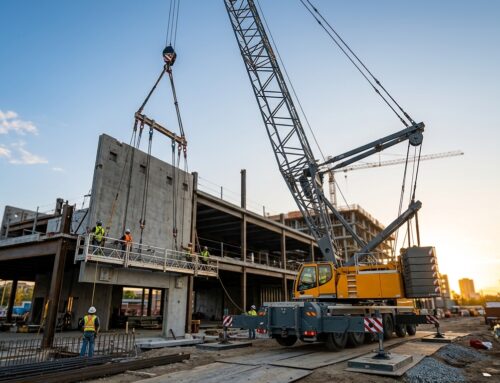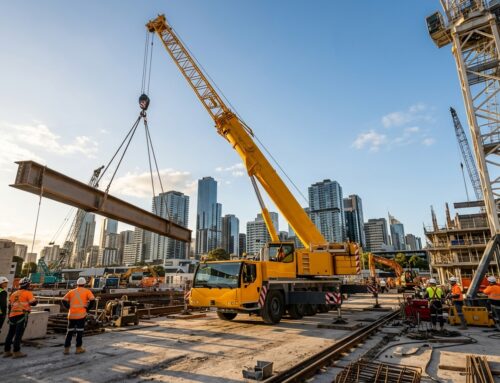

Site Access Guide
What Are the Site Access Requirements for Crane Hire in Adelaide?
What to check before a crane arrives: access routes, ground, overhead hazards and the space needed for a controlled lift.
Crane hire site access can affect the equipment, setup and timing your project needs. A narrow gate, soft ground, overhead power line or busy footpath can change the lift plan well before the crane arrives. Sharing those details when you request a quote gives the lift planner a better starting point than a load weight alone.
Crane hire site access requirements in Adelaide vary with the crane, the load, the route and the work area. The following questions can help an Adelaide project manager, builder or property owner prepare useful information. They are a planning checklist, not a substitute for a site assessment and lift plan.
Can the crane and support vehicles reach the setup position?
Start at the street, not at the lift point. Measure the usable entrance width and height, and identify tight turns, gradients, low awnings, gates, parked vehicles and areas where a vehicle cannot reverse or turn safely. Check whether delivery vehicles, rigging gear or an escort crew also need access. A clear route on a drawing may look different when temporary fencing, stored materials or other trades are on site.
Photographs help, but dimensions matter. Send an annotated site plan that marks the street approach, entrance, intended crane position, load pickup and final placement point. Include any route through a shared driveway or neighbouring property. If access depends on a gate being removed or a vehicle being moved, arrange that before the crew’s arrival and tell the planner what has changed.
Where the crane or support operation would occupy a public road, parking lane or footpath, a council permit and traffic arrangements may be required. That question belongs in the early booking discussion, not on the morning of the lift. The relevant council and road authority depend on the exact location and activity.
Is the ground suitable for the crane’s loads?
Ground that supports a car does not automatically support a crane, its outriggers or the loads during a lift. Safe Work Australia’s crane guidance calls for consideration of the pressure transferred through outriggers, tyres or tracks, along with dynamic forces, nearby excavations and underground services. The required assessment depends on the equipment and setup, so avoid relying on a visual impression alone.
Tell the planner about filled or recently excavated ground, pits, trenches, retaining walls, basements, suspended slabs, septic systems, service covers and any other area whose strength is uncertain. Provide available engineering or ground-bearing information, including slab load limits where relevant. Keep the proposed setup area clear so the team can inspect it. Ground protection, a different position or another lift method may be needed after review.
Do not assume the closest position to the load is the best one. The ground and the space needed to deploy outriggers can make a more distant position preferable. That change can also affect the reach and capacity needed from the crane, which is why the setup location must be assessed with the lift details.
What is above, below and beside the lift path?
Identify overhead power lines, building projections, trees, signs, scaffold, lighting and neighbouring structures. Give the planner the location of underground electricity, gas, water, communications and drainage services where known. These features can affect both the crane position and the movement of the boom or load.
Power lines deserve particular attention. SafeWork SA has warned about crane and mobile-plant incidents near live lines and advises assessing the line and the applicable controls before work. Clearance requirements depend on the line and operating circumstances; do not use a single assumed distance. Where a line could be affected, discuss the work with the relevant electricity network operator and the competent lift team before setting the schedule.
The load’s path matters as much as the crane’s footprint. Mark where it will be picked up, slewed and landed. Note nearby roofs, balconies, temporary works and any point where the load could pass over people or occupied areas. Site drawings, recent photos and a walkthrough can expose conflicts that are easy to miss in a brief description.
Is there room for a controlled work zone?
The crane needs more than a parking space. The work area may need room for outriggers, counterweights, rigging, the load, crew movement, delivery vehicles and an exclusion zone. SafeWork SA identifies unstable ground, plant reach, uncontrolled access and traffic as mobile-plant hazards; controls can include barriers, spotters and traffic management, depending on the risk assessment.
Plan how other workers, pedestrians and vehicles will move while the lift takes place. Tell the planner about school or business access, loading docks, shared driveways and deliveries that cannot be interrupted. Consider whether an adjacent work crew needs to pause. The final exclusion zone and crew arrangements belong in the lift plan and site controls.
Wind and weather can also alter the safe lift window, especially for loads with a large surface area. Provide the intended date and time, but leave room for the responsible team to assess conditions at the time. A schedule should not pressure anyone to lift outside the applicable equipment or site limits.
What information should you send with a crane-hire enquiry?
A useful first enquiry contains the site address, access route and contact person; the load’s dimensions, weight and lifting points; the pickup and placement locations; the approximate height and reach; the proposed date; and photos or plans. If the load weight or centre of gravity is uncertain, say so rather than guessing. Include known ground, service, power-line and public-space constraints.
For a construction project, also identify the principal contractor or site controller, any induction requirements, and who can provide drawings or approvals. SafeWork SA notes that a safe work method statement is required for high-risk construction work involving the movement of powered mobile plant. The project team should confirm its document and coordination responsibilities before work starts.
These details help the crane provider decide what further inspection, engineering information, permits or planning is needed. They do not by themselves establish that a particular crane can do the job. If you are comparing options, ask how each proposed setup addresses the access and ground conditions, not just the nominal lifting capacity.
A practical pre-lift access check
Before the agreed arrival time, confirm that the access route and setup area match the plans sent to the lift team. Remove agreed obstructions, secure the work zone, have the relevant site contact available and keep approval documents accessible. If a trench, delivery, scaffold or traffic arrangement has changed, tell the planner. A changed site can require a changed plan.
United Cranes can start an access conversation from the site information you provide. For the service overview and enquiry route, see crane hire in Adelaide and South Australia. Describe the lift and send the best drawings and photos you have; the next step is to establish what must be checked on site.
Sources and further reading
Safe Work Australia, General Guide for Cranes; SafeWork SA, Mobile plant; SafeWork SA, warning around powerlines.
Discuss your crane hire requirements
Share the site, load, access and timing details with United Cranes so the right planning questions can be addressed.
Related services
This article is general planning information and does not replace a site assessment or lift plan.